Toward Sustainable Food for All
Key Takeaways - Theirs
- Governments incentivize the production of energy-dense but nutrient-cheap foods to the tune of billions of dollars in annual farm subsidies. (IE: Calories not nutrition; concentration of wealth.)
- By releasing stored carbon into the atmosphere, tropical deforestation contributes about 20% of annual greenhouse gas emissions. Overall, food system emissions represent more than one-third of greenhouse gas emissions.
- Farming is the world’s greatest cause of habitat destruction, the greatest cause of the global loss of wildlife, and the greatest cause of the global extinction crisis.
- Some estimates peg industrial farming’s annual environmental cost at $3 trillion a year. This rivals the trillions of dollars in costs that burning fossil fuels inflicts annually upon the environment.
Key Takeaway - Ours
- More local producers and shorter supply lines can "move the needle" toward food equity.
- We and you can do better. Where do you want to start?
Building Community with Controlled Environment Agriculture
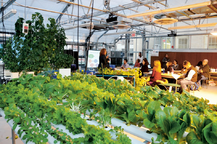
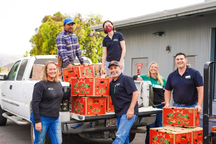
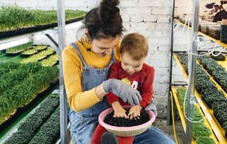
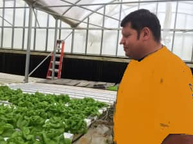
We don't know all the answers, and we invite you to help us find a better way. It will only happen if all the producers and consumers talk to one another openly and honestly. If this is your first time considering this problem, you might start here and then return to the Home page to tour the rest of the site.
Applications Abound! Individuals and organizations can organize local, community based, CEA farms both small and large, limited only by imagination and effort. Thanks for visiting! CLOSE!
Why We Do This
- We strive to build awareness and acceptance of healthy diets and local production.
- We are motivated by social issues stemming from the challenges of so-called urban food deserts, consisting of communities that are poorly served by the 20th Century model of food distribution and marketing system with its vicious circle of decreasing nutrition and economic decline. Many of these issues can be addressed, at least in part, by replacing industrial farming, long-distance transportation, and expensive storage with more eco-friendly, sustainable models that keep the food fresh and the money local.
Project Development
- We develop urban vertical gardening projects in cooperation with non-profits, churches, schools and small businesses.
- Our comprehensive planning tool helps new and experienced farmers avoid pitfalls that come from insufficient understanding of the business of indoor farming.
- We cultivate new economic engines in disadvantaged communities.
- We support collaborations between civic, educational and nonprofit groups.
- We provide guidance regarding capital formation, equipment, logistics, training, production, distribution and management skills. Each local producer provides space, personnel and local transportation and networking.
- More about projects
Training
- We work with local affiliates to create training programs for technicians, managers and entrepreneurs with hands-on and classroom experience in soil-free gardening.
- We expose growers and students to a wide range of crops, equipment and media.
- We explore how to make crop choices based on market research.
- We encourage and support multiple methods of hydroponic cultivation; we do not focus on specific methodologies or advocate for particular products.
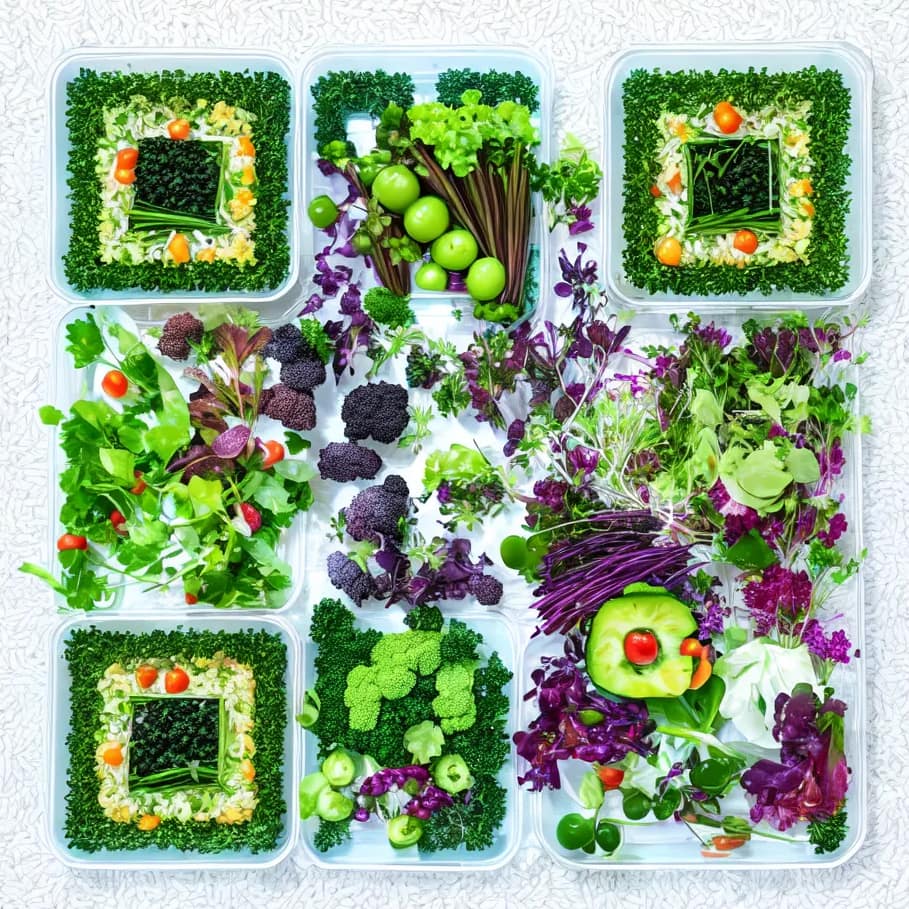
- Our current emphasis is on microgreens, the highly nutritious early stage of various vegetables.
Sumario en español
La compañia Agricultura Urbana Jardín del Edén existe para fomentar soluciones a estos problemas. [Más información]
[36] "U.S. children from Spanish-speaking households experience higher rate of obesity than those from English-speaking families". Endocrine Society. 2021-03-20. Retrieved 2022-03-06.
[37] Li, Hang Long; Tsoi, Man Fung; Feng, Qi; Cheung, Ching-Lung; Cheung, Tommy; Cheung, Bernard M Y (3 May 2021). "Prevalence of Childhood Obesity in the United States 1999 - 2018: A 20-Year Analysis". Journal of the Endocrine Society. 5 (Supplement_1): A24–A25. doi:10.1210/jendso/bvab048.047. PMC 8090293.
Community Partners
|